- Right now
- Open now · closes ~6 pm
- Usual hours
- about 9:00 AM – 6:00 PM
- Tickets
- ~₹200 Indian
~₹600 foreign - Distance
- In the city
- Time needed
- 3–4 hours
- Best time
- Morning, before 11 am
Updated 26 Sep 2026. Times and fees are approximate.
Highlights
- Raj Mahal palace museum
- Jain temples
- Ramparts & cannon points
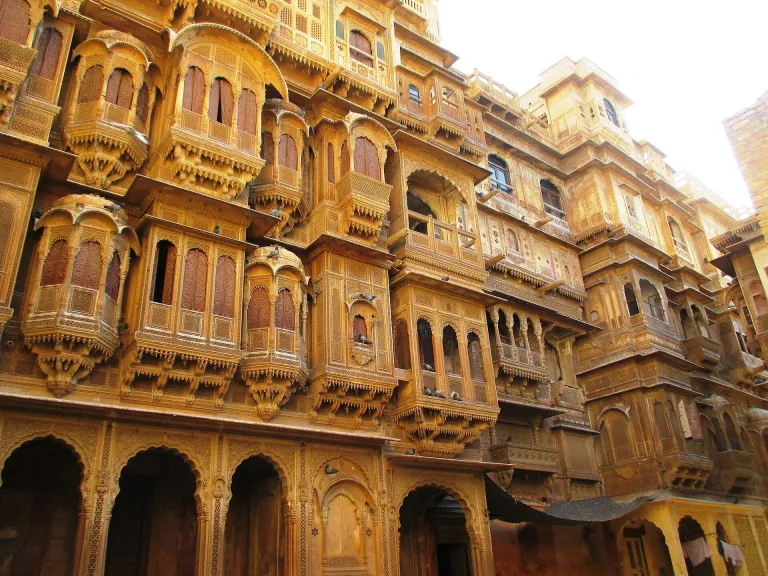
- Havelis & lanes
- Sunset view from the walls
- Rooftop cafés
A fort people still live in
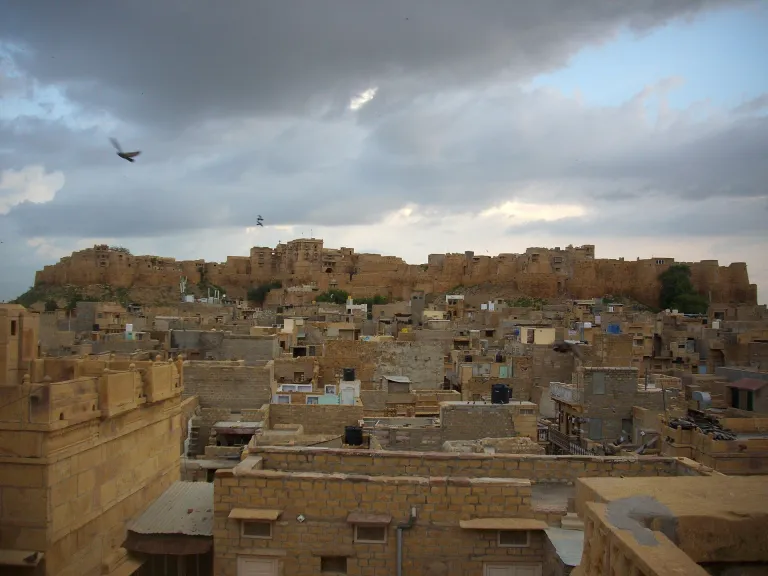
Jaisalmer Fort, often called Sonar Qila or the Golden Fort, sits on Trikuta hill above the old city. Its yellow sandstone walls turn a warm honey colour in the late afternoon, which is where the nickname comes from. What makes it different from most Indian forts is that it is still lived in. Families run guesthouses, shops and small temples inside the walls, and children walk to school through the same gates that visitors use.
You can walk into the fort itself without a ticket. The fees you will meet are for the Fort Palace Museum (Raj Mahal) and, for some visitors, the Jain temples. The facts panel on this page lists the current figures; in short, the palace museum is about ~₹200 for Indian visitors and ~₹600 for foreign visitors, and it usually opens about 9:00 AM – 6:00 PM.
A short history
Tradition holds that Rawal Jaisal, a Bhati Rajput ruler, founded the fort and the city around 1156 CE after leaving the older capital at Lodurva. That date is the one most historians accept, though you will see others quoted. The fort grew over the following centuries, with rings of walls and a large number of bastions; the figure usually given is 99, though counts differ depending on what you call a bastion.
The Jain temples inside are generally dated between the 12th and 16th centuries. In 2013 the fort was inscribed by UNESCO as part of the "Hill Forts of Rajasthan" group, alongside five other forts in the state. For the wider story of the Bhati rulers and the caravan trade that paid for all this stone, read our Jaisalmer history guide.
What to see, in walking order
Gates and the main square
Most people enter from the east through a series of gates, the last of which opens onto the main square, Dussehra Chowk. The Raj Mahal rises on one side of it. Go early: the lanes are quiet before about 10 am and the stone is still cool.
Fort Palace Museum
Allow about an hour. The rooms climb through several floors, with carved balconies, royal objects and rooftop views across the city. The foreigner ticket usually includes an audio guide.
Jain temples
A short walk west brings you to a connected group of Jain temples with dense carving on pillars and ceilings. Visitor hours are usually mornings only, roughly about 8:00 AM – 12:00 PM. Leave leather items outside and dress modestly.
Ramparts and lanes
Finish by wandering the lanes to the cannon points on the walls. The views west over the desert and north over the havelis are the reason to linger, and a rooftop café is a good place to wait out the midday heat.
Light and photography
The fort is best photographed from outside. Late afternoon light from the west lights up the walls; Vyas Chhatri and the edge of Gadisar Lake are the classic viewpoints. Inside, morning gives soft light in the lanes. Ask before photographing residents, and note that the palace museum may charge a separate camera fee.
Combining and practical notes
A comfortable half day covers the fort. Pair it with the havelis just below the walls: Patwon ki Haveli, Nathmal ki Haveli and Salim Singh ki Haveli are all a short walk away. End the day at Gadisar or Vyas Chhatri for sunset. Our Jaisalmer itinerary shows how this fits into two or three days.
A quiet word on conservation: the fort has real problems with water seepage, partly linked to modern plumbing and the load of hotels inside the walls. Many travellers now choose to stay just outside the fort, which eases that pressure. If you do stay inside, use water sparingly.
For all fees in one place, see the fort ticket price guide. Figures change, so confirm at the counter.
Tips for your visit
- Arrive before 10 am to see the Jain temples, which usually close to visitors around midday.
- Wear shoes you can slip off easily; temples require you to remove footwear.
- Leave belts, wallets and bags made of leather at your hotel on temple days.
- Buy museum tickets only at the official counter inside the main square.
- Hire a licensed guide at the gate if you want the stories behind the carvings.
- Carry water and a hat; the lanes have little shade after noon.
Tickets & timings
| Place | Indian | Foreign | Camera | Usual hours |
|---|---|---|---|---|
| Fort Palace Museum (Raj Mahal) Walking into Jaisalmer Fort itself is free; the fee is for the palace museum. Foreigner ticket usually includes an audio guide. | ~₹200 | ~₹600 | ~₹100 | about 9:00 AM – 6:00 PM |
| Jain temples inside the fort Visitor hours are usually mornings only. Leather items are not allowed inside; dress modestly. | Free | ~₹200 | ~₹100 | about 8:00 AM – 12:00 PM |
Photos
Where it is
In the city. Other places are marked too; tap a pin for details.
The map needs JavaScript. Every place is also listed with its distance from the city.
Map data © OpenStreetMap contributors. Pins are approximate; use your phone map on the road.
Frequently asked questions
What is the entry fee for Jaisalmer Fort?
About ~₹200 for Indian visitors and ~₹600 for foreign visitors, plus roughly ~₹100 for a camera. Walking into Jaisalmer Fort itself is free; the fee is for the palace museum. Foreigner ticket usually includes an audio guide.
What are the timings of Jaisalmer Fort?
Usually about 9:00 AM – 6:00 PM. Best time: morning, before 11 am.
How much time do I need at Jaisalmer Fort?
Plan for 3–4 hours.
Do people really live inside Jaisalmer Fort?
Yes. A few thousand people are commonly said to live inside, running homes, guesthouses and shops. That is why it is called a living fort, and why you should be respectful with cameras in residential lanes.
Is there an entry fee for the fort itself?
No. Walking in through the gates is free. You pay for the Fort Palace Museum and, depending on nationality, the Jain temples. See the facts panel above for current figures.
How long should I spend inside the fort?
Plan three to four hours to see the museum, the temples and the ramparts at an easy pace. Add time if you want a long café break or a guided walk.
Should I stay inside the fort?
It is atmospheric, but the fort has water-seepage problems and many conservationists suggest staying outside the walls. Hotels just below the fort still give you views and a short walk in.